
20ft vs. 40ft Storage Containers: Which Size Do You Need?
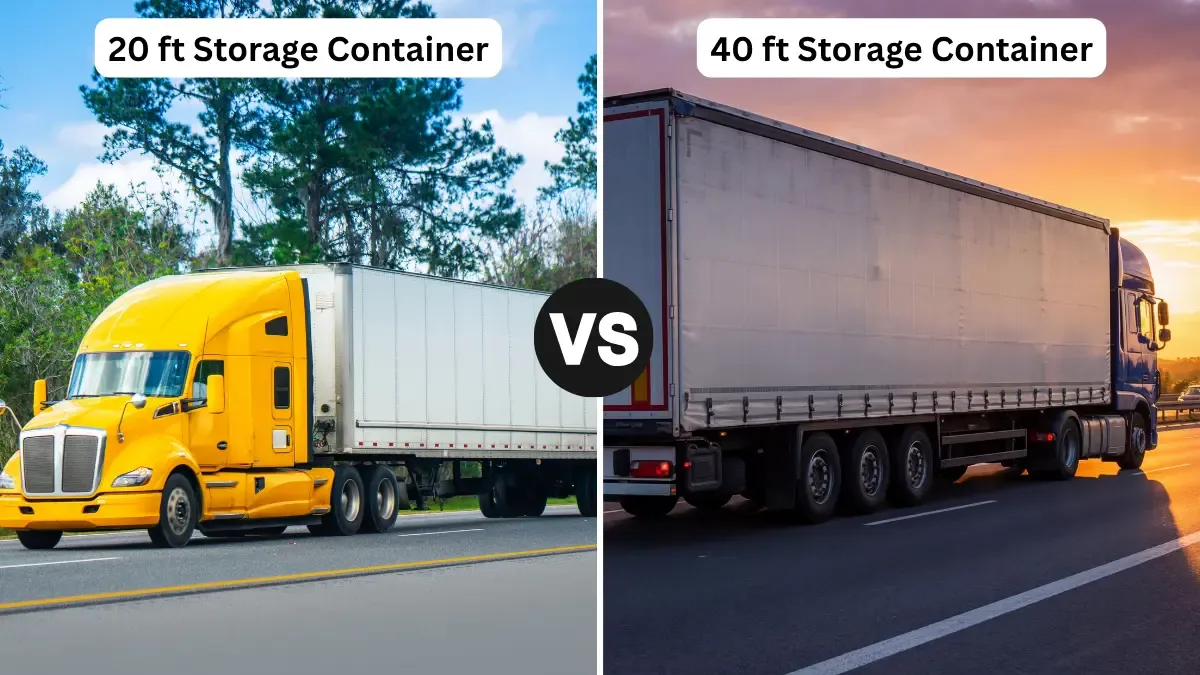
One of the first questions that comes up the moment you decide to rent a storage container is also one of the easiest to get wrong: what size do you actually need? Order too small, and you're stuck shuffling items around or renting a second unit halfway through your project. Order too big, and you're paying for empty space and eating up more of your lot or job site than necessary. The 20 ft vs 40 ft storage container decision comes down to a handful of practical factors—what you're storing, how much space you have, and how long you'll need it—and getting it right upfront saves both money and headaches. The team at RTM Trucking fields this question constantly from businesses across New Jersey, so here's a straightforward breakdown of how to choose.
The Basic Size Difference
Before getting into use cases, it helps to know the actual numbers.
20ft containers typically offer around 160 square feet of floor space and roughly 1,170 cubic feet of storage volume. They're compact enough to fit in tighter spaces — a smaller parking lot, a residential driveway, or a job site with limited room to maneuver.
40ft containers roughly double that capacity, offering around 320 square feet of floor space and about 2,350 cubic feet of storage volume. They're the better choice when you're storing large volumes of inventory, bulky equipment, or need room to walk between stacked items.
The extra length matters more than people expect once you start loading a container — a 40ft unit doesn't just hold twice as much, it also gives you more flexibility in how items are arranged, which matters if you need to access specific things without unloading everything else first.
When a 20ft Container Makes Sense
A 20ft container tends to be the right call for:
- Small business overflow inventory — retailers managing seasonal stock spikes without a full warehouse's worth of extra product
- Residential moves or renovations — furniture and belongings from a single-family home usually fit comfortably
- Job sites with limited space — smaller lots, tighter urban sites, or locations where a 40ft container simply won't fit
- Short-term equipment storage — tools, smaller machinery, or supplies for a contained project
- Document or record storage — filing boxes and archived materials that don't need a lot of floor space
If you're not entirely sure how much you're storing, a 20ft container is often the safer starting point for smaller operations, since it's easier to add a second unit later than to downsize a 40ft container you're not fully using.
When a 40ft Container Makes Sense
A 40ft container is the better fit when:
- You're storing a large volume of inventory — retailers preparing for seasonal inventory surges often need this extra capacity to handle holiday or peak-season stock without running out of room mid-season
- A construction or renovation project involves bulky materials — lumber, fixtures, large equipment, or full sets of tools across a bigger site
- You're consolidating multiple smaller storage needs into one unit — rather than renting two or three 20ft containers, a single 40ft unit can be more efficient to manage
- The project timeline is longer — for extended jobs, the extra room reduces how often you're reorganizing or running out of space
- You need walking room inside the container — for frequent access to specific items without unloading everything stacked in front
Don't Forget About Footprint and Placement
Size isn't just about what fits inside the container — it's also about what fits on your property or job site. Before deciding on a size, measure the actual space where the container will sit, and account for:
- Clearance needed for delivery and placement (the delivery truck needs room to maneuver, not just the container itself)
- Distance from doorways, walkways, or areas you need to keep clear
- Local permit or zoning restrictions, particularly for longer-term placements in commercial or residential areas
- Ground surface — a flat, stable surface is important regardless of container size, but becomes more critical with the added weight of a fully loaded 40ft unit
A 40ft container that technically fits on your lot but blocks a loading dock or delivery path can create more problems than it solves. It's worth walking the actual space before committing to a size.
What About Cost?
Larger containers cost more to rent than smaller ones, but the per-square-foot value often favors the 40ft option if you genuinely need the capacity. Renting two 20ft containers to match the space of one 40ft unit is typically less cost-effective than renting the larger single container — plus you're dealing with two delivery and pickup logistics instead of one.
That said, paying for a 40ft container you don't need to fill defeats the purpose of the savings. If your inventory or project genuinely fits comfortably in a 20ft unit, sizing up "just in case" usually isn't worth the added cost.
Temperature-Sensitive Storage Changes the Calculation
If what you're storing is perishable, climate-sensitive, or otherwise needs temperature control — food products, certain electronics, cosmetics, or other goods affected by heat and humidity — a standard container isn't the right solution regardless of size. It's worth reviewing which types of inventory actually require temperature-controlled storage before choosing a size, since climate-controlled units come with their own capacity considerations separate from standard container sizing.
A Simple Way to Decide
If you're still not sure which size fits your situation, a rough rule of thumb helps: picture your items laid out on the floor of a two-car garage (roughly matching a 20ft container) versus a two-car garage plus a similarly sized workshop attached (closer to a 40ft container). If your inventory or equipment would comfortably fill or slightly exceed the smaller space, a 20ft unit is probably enough. If it would spill well beyond that, a 40ft container is the safer choice.
For construction-specific storage, where tools, materials, and equipment security all factor in, it's also worth looking at how contractors keep job site materials secure and organized, since the right container size often depends as much on organization and access as it does on raw volume.
Final Thoughts
The 20ft vs 40ft storage containers decision really comes down to matching capacity to your actual needs — not guessing, and not automatically sizing up "to be safe." A 20ft container works well for smaller operations, tighter spaces, and shorter-term needs, while a 40ft unit makes more sense for larger inventory volumes, bigger projects, and situations where consolidating storage into one unit saves on cost and logistics. Measuring your space, being honest about how much you're actually storing, and factoring in how long you'll need the container all help point toward the right size the first time — rather than realizing halfway through your project that you guessed wrong.
Frequently Asked Questions
Can I upgrade from a 20ft to a 40ft container if I run out of space?
In most cases, yes, though it depends on the provider's availability and scheduling. It's usually easier to plan ahead with the right size than to swap mid-project.
Do 40ft containers cost exactly double a 20ft container?
Not usually. Larger containers typically cost more per rental period, but not a full 2x increase, making them a better value when you genuinely need the extra capacity.
How much space do I need on my property for container delivery?
Beyond the container's footprint, you'll need clearance for the delivery truck to maneuver into position, which can require more space than the container itself.
Is a 20ft container big enough for a residential move?
For most single-family homes, yes — a 20ft container typically holds the contents of a standard-sized home comfortably.
What size container is best for seasonal business inventory?
This depends on inventory volume, but many businesses managing seasonal surges find a 40ft container better handles peak-season stock without running out of room.