
Storage Containers for Retail Pop-Ups and Seasonal Storefronts
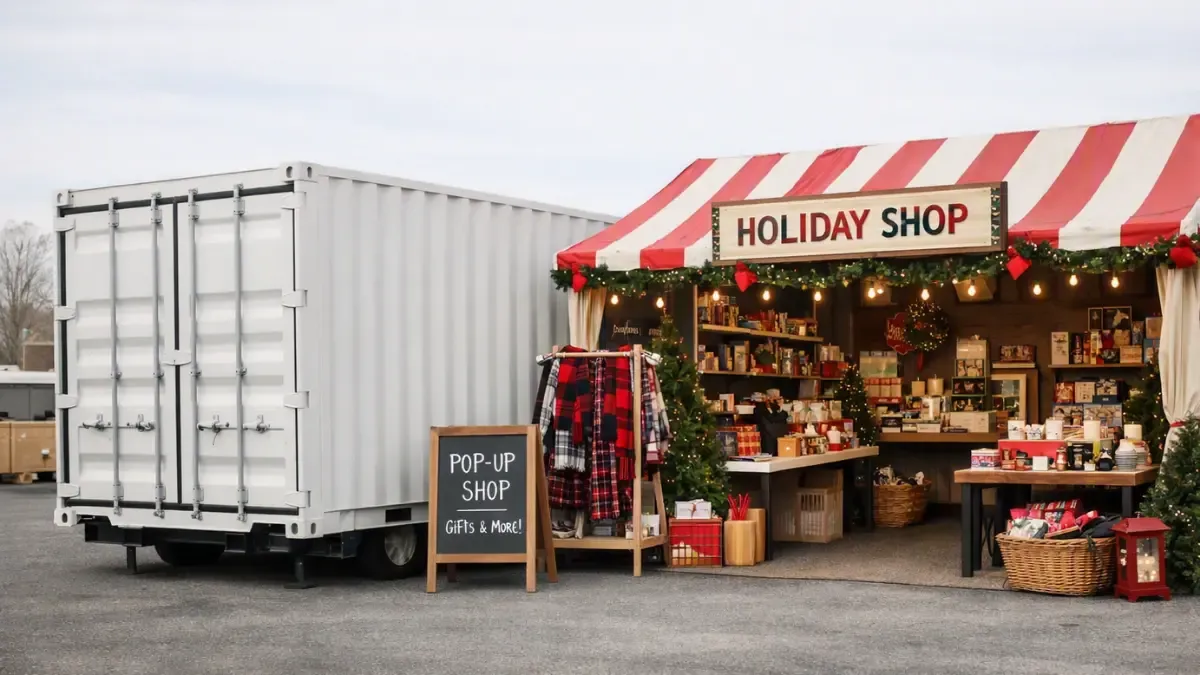
Pop-up shops and seasonal storefronts run on a completely different rhythm than a permanent retail location. A holiday market booth might only need space for six weeks. A seasonal storefront selling costumes in October or holiday decor in December has a hard start and end date built into the business model itself. That timeline makes traditional warehouse leasing a poor fit, which is exactly why storage containers for retail pop-ups have become such a practical solution — flexible enough to match a short-term business cycle without the long-term commitment a permanent space requires. RTM Trucking works with retailers across New Jersey managing exactly this kind of short-window operation, so here's how portable storage fits into a pop-up or seasonal retail plan.
Why Pop-Up and Seasonal Retail Has Unique Storage Needs
A permanent retail store has time to build out a backroom, negotiate a long-term storage arrangement, and plan inventory flow across an entire year. Pop-up and seasonal retailers don't have that luxury. They need to:
- Store a full season's worth of inventory in a short window, often before the storefront even opens
- Handle a rapid influx of stock at launch and a rapid drawdown as the season winds down
- Avoid signing a warehouse lease that outlasts the actual selling season by months or years
- Keep inventory secure and protected from weather, even in a temporary retail location
A permanent warehouse commitment doesn't make financial sense for a business that might only operate for a matter of weeks. Portable storage solves this by matching the storage timeline to the actual retail timeline, rather than forcing a short-term business into a long-term real estate decision.
How Storage Containers Fit Into a Pop-Up Retail Plan
Portable storage containers work well for pop-up and seasonal retail in a few specific ways:
On-site inventory storage. A container can be delivered directly to or near the pop-up location, giving retailers immediate access to backstock without a separate trip to an off-site warehouse. This matters especially for high-traffic seasonal retail, where running out of a popular item mid-day and needing to restock quickly is common.
Overflow capacity during peak demand. Even pop-up retailers can outgrow their initial storage plan if a product sells faster than expected. Using overflow inventory storage as a flexible buffer lets retailers move excess stock into a separate container rather than cramming it into an already tight retail space.
Between-season storage for recurring seasonal businesses. Retailers who return every year — holiday pop-ups, seasonal costume shops, summer market vendors — often need somewhere to store fixtures, displays, and unsold inventory between seasons. A rented container avoids paying for year-round warehouse space that sits mostly unused outside the actual selling window.
Staging inventory before launch. Many pop-up retailers need to receive and organize inventory before the storefront officially opens. A container delivered ahead of launch day gives retailers a place to stage everything without cluttering the retail space itself during setup.
Why This Beats a Traditional Warehouse Lease for Short-Term Retail
The core advantage of portable storage over a warehouse lease comes down to flexibility. Purchasing or leasing storage space outright isn't always practical for a business operating on a short, defined timeline, whereas container rental allows businesses to access secure storage without a substantial long-term commitment. This shows up in a few concrete ways for pop-up and seasonal retailers specifically:
- No long-term lease commitment — rental periods can match the actual length of the selling season, rather than locking in a full year or more
- Predictable, manageable costs — rental pricing tends to be more budget-friendly for a short operating window than negotiating and furnishing a warehouse space
- Scalable capacity — storage needs can increase or decrease as the season progresses, without renegotiating a lease
- Delivery flexibility — containers can be positioned directly at or near the retail location, cutting down on transportation time between storage and the point of sale
Weather Protection Matters More Than People Expect
Pop-up and seasonal retail locations are often set up in spaces not originally designed for retail — parking lots, event venues, temporary structures. Storage containers are built to be weather-resistant and secure, which matters significantly for inventory that might otherwise be exposed to rain, humidity, or temperature swings in a less-than-ideal temporary setup. For retailers selling products sensitive to heat or moisture, it's worth reviewing which types of inventory actually require temperature-controlled storage, since standard containers work well for most retail goods but aren't the right fit for everything.
Planning Storage Timing Around Your Retail Calendar
Getting the most value out of a rented container for pop-up retail comes down to timing it correctly against your actual business calendar:
- Order storage ahead of your busiest inventory intake period, not after it, so you're not scrambling to find space once product starts arriving.
- Plan for a gradual drawdown, since seasonal retail rarely sells out evenly — you'll likely need storage capacity well past opening day as inventory slowly moves.
- Schedule pickup around your actual closing date, not an estimated one, to avoid paying for storage you no longer need or losing access before you're fully wrapped up.
- Reassess capacity mid-season if sales are running faster or slower than expected, since flexible rental terms make it easy to adjust rather than being locked into an initial estimate.
A Practical Fit for Growing Seasonal Businesses
For retailers who started small and are scaling up their seasonal operation year over year, portable storage also offers room to grow without a proportional jump in overhead. A business that needed a single container in its first year can add capacity in year two without needing to find an entirely new storage solution — the flexibility scales with the business rather than requiring a bigger, more permanent commitment before it's clear the growth will continue.
Final Thoughts
Storage containers for retail pop-ups and seasonal storefronts solve a problem that traditional warehouse leasing was never built to handle well — a retail operation with a defined, often short, timeline that needs secure, flexible inventory space without a long-term real estate commitment. Whether it's staging inventory before launch, handling overflow during a strong sales week, or storing fixtures between seasons, portable storage matches the actual rhythm of pop-up and seasonal retail far better than a fixed lease ever could. For businesses planning their next seasonal launch, timing container delivery around your actual retail calendar makes the difference between a smooth operation and a last-minute scramble.
Frequently Asked Questions
1. How far in advance should I rent a storage container for a pop-up shop?
It's best to arrange delivery before your inventory intake period begins, giving you space to organize and stage products before the storefront actually opens.
2. Can a storage container be delivered directly to a pop-up retail location?
In most cases, yes. Portable containers are commonly delivered directly to commercial locations, including temporary retail sites, reducing the need for a separate off-site storage trip.
3. Is portable storage cheaper than leasing warehouse space for a seasonal business?
For short-term, defined selling seasons, portable storage is typically more cost-effective, since it avoids the long-term commitment and overhead of a traditional warehouse lease.
4. What if my pop-up shop sells out faster or slower than expected?
Rental storage terms are generally flexible, allowing you to adjust capacity or rental duration as actual sales patterns become clear during the season.
5. Do storage containers protect retail inventory from weather damage?
Yes. Storage containers are built to be weather-resistant and secure, which is particularly useful for pop-up and seasonal retail set up in temporary spaces not originally designed for storage.